


DBA definition and business name registration services guide explaining DBA filing, compliance, renewals, and how FastFile simplifies the process.
DBA Definition and Business Name Registration Services Guide
A Doing Business As (DBA) name allows a business to operate under a trade name that differs from its legal name while keeping the same underlying structure. Whether you are a sole proprietor, partnership, LLC, or corporation, understanding how DBA registration works is essential for branding, banking, and compliance.
What Is a DBA (Doing Business As)
A DBA (Doing Business As) is a registered business name that allows an individual or existing business entity to operate under a name different from its legal name. A DBA does not create a new legal entity and does not change the underlying ownership, tax status, or liability structure of the business.
Depending on the state, a DBA may also be referred to as a trade name, fictitious business name, or assumed name, but the legal function remains the same across jurisdictions.
Purpose and Uses of a DBA Registration
A DBA registration is primarily used for branding, public transparency, and operational flexibility. It allows a business to present itself to customers under a market-friendly name while continuing to operate under its existing legal structure.
Many businesses use DBAs to launch new product lines, expand into new markets, or operate multiple brands without forming separate legal entities. A DBA also ensures that the public and government agencies can identify the party legally responsible for the business.
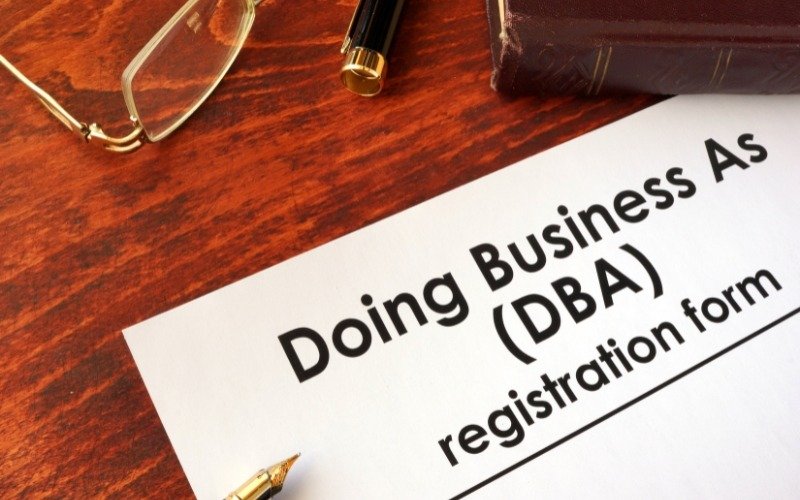
What Is a DBA (Doing Business As)
Who Can Register a DBA
1. DBA registration for sole proprietors and partnerships
Sole proprietors and partnerships often use DBAs to operate under a professional or descriptive business name instead of the owner’s personal name. Because these structures have no separate legal identity, the DBA filing connects the business name directly to the individual or partnership that owns it.
2. DBA registration for LLCs
Limited Liability Companies may register one or more DBAs to operate under alternative names while maintaining the same LLC structure. The LLC remains the legal entity responsible for contracts, taxes, and liabilities, while the DBA functions only as an alternate operating name.
3. DBA registration for corporations
Corporations may also register DBAs to conduct business under different brand names without creating subsidiaries. The corporation retains full legal responsibility for activities conducted under the DBA, and the DBA does not affect shareholder rights, governance, or tax classification.
How to Register a DBA in the United States
1. State-level vs county/city-level DBA filing rules
DBA registration requirements vary by jurisdiction. Some states require filing with a state agency, while others mandate county/city-level filing where the business operates. Certain states apply both systems depending on the entity type.
2. DBA name availability search
Before filing, the business must confirm that the desired DBA name is available and not already in use within the applicable jurisdiction. This search helps prevent conflicts and filing rejections.
3. Filing forms, fees, and publication requirements
DBA filings typically require a completed form, filing fee, and authorized signature. Some states or counties also require publication of the DBA in a local newspaper for a specified period to provide public notice.
Information Required for DBA Registration
- Legal owner information
A DBA filing must clearly identify the individual or legal entity that owns and operates the business name. This includes the full legal name of the sole proprietor, partnership, LLC, or corporation using the DBA.
Providing accurate owner information ensures public transparency and allows consumers, regulators, and courts to determine who is legally responsible for the business’s activities conducted under the DBA.
- DBA business name
The exact trade name the business intends to use must be listed on the filing. The name must comply with local naming rules, such as restrictions on misleading terms or words implying a regulated profession. Accuracy is critical because even minor differences in spelling or punctuation can cause rejection or limit the enforceability of contracts signed under the DBA.
- Business address
Most jurisdictions require a physical business address associated with the DBA. This address links the trade name to an actual operating location and may appear on public records. Using a complete and current address helps ensure the business receives official notices and avoids compliance issues related to improper disclosure.
- Authorization and signature
A DBA filing must be signed by an authorized individual, such as the owner, an LLC member or manager, or a corporate officer. The signature certifies that the information provided is accurate and that the signer has authority to register the DBA on behalf of the business.

How to Register a DBA in the United States
Ongoing Compliance Requirements for a DBA
- Renewal obligations
Many states and counties require DBAs to be renewed on a recurring schedule, often every one to five years. Failure to renew can result in the DBA becoming inactive, which may prevent the business from legally using the trade name in contracts, banking, or advertising.
- Updates to business information
If the business changes ownership, address, or underlying legal structure, an amended DBA filing may be required. Keeping DBA information current helps avoid discrepancies between public records and actual business operations, which can create legal or banking complications.
- Coordination with entity compliance
A DBA does not replace compliance obligations for the underlying business entity. LLCs and corporations using DBAs must still file annual reports, pay state fees, and meet tax and regulatory requirements. DBA compliance works alongside, not instead of, entity-level compliance.
Common DBA Filings and Business Services
1. DBA registration services
This includes preparing and submitting the initial DBA filing with the appropriate state or county authority. Proper registration allows the business to legally operate under the chosen trade name.
2. DBA amendments and name changes
When a business modifies its trade name or updates key information, an amendment filing ensures that public records remain accurate and enforceable.
3. DBA cancellation and withdrawal
If a business stops using a DBA, a formal cancellation or withdrawal filing removes the name from public records. This step helps prevent future liability or confusion related to an unused trade name.
4. EIN considerations when using a DBA
A DBA itself does not receive an EIN. Tax identification requirements depend on the underlying business structure. For example, an LLC using a DBA continues to use the LLC’s EIN for tax reporting and payroll.
5. DBA support with banking and contracts
Banks, payment processors, and vendors often require proof of DBA registration before allowing accounts or contracts under the trade name. Proper documentation helps ensure smooth financial and contractual operations.
Advantages and Limitations of a DBA
1. Benefits of registering a DBA
- Brand flexibility
A DBA allows a business to operate multiple brands, product lines, or service names without forming separate legal entities. This flexibility supports growth and marketing strategies while keeping administrative complexity low.
- Public transparency
DBA registration makes ownership information publicly accessible, helping customers and regulators identify who is behind a business name. This transparency supports trust and compliance with consumer protection laws.
- Low cost and simplicity
Compared to forming an LLC or corporation, registering a DBA is generally faster and less expensive. This makes DBAs an accessible option for small businesses and startups testing new ideas.
2. Legal limitations and risks of a DBA
- No liability protection
A DBA does not provide limited liability. Any debts, lawsuits, or obligations incurred under the DBA are legally the responsibility of the underlying owner or entity.
- No tax separation
Income earned under a DBA is taxed as income of the underlying business or individual. A DBA does not create a separate tax identity or filing obligation.
- Limited name protection
DBA registration does not grant trademark rights or exclusive statewide protection. Other businesses may be able to use similar names unless trademark protection is obtained separately.
When a DBA Is the Right Choice for a Business
A DBA is appropriate when a business wants to operate under a different name for branding or expansion purposes without changing its legal structure.
It is commonly used by sole proprietors seeking professionalism and by LLCs or corporations managing multiple brands under one entity. Businesses seeking liability protection or ownership separation should consider forming an LLC or corporation instead.
How FastFile Supports DBA Registration and Compliance
Step 1: DBA name search and registration with FastFile
FastFile verifies name availability and prepares the DBA filing based on state or county requirements, reducing the risk of rejection or delays.
Step 2: DBA amendments, renewals, and cancellations
FastFile manages updates and renewal filings to help businesses keep their DBAs active and compliant throughout their lifecycle.
Step 3: DBA support alongside LLC or corporation filings
For businesses using DBAs with LLCs or corporations, FastFile coordinates DBA filings with entity formation, amendments, and annual reports for a unified compliance approach.
Step 4: FastFile pricing, simple requirements, and 24-hour processing
With as few as 10 simple questions, flat-fee pricing starting from $40, and processing often completed within 24 hours, FastFile offers an efficient and dependable solution for DBA filings.

How FastFile Supports DBA Registration and Compliance
Frequently Asked Questions About DBAs
1. Is a DBA a separate legal entity
No. A DBA is only a registered business name and does not create a separate legal entity.
2. Does a DBA provide liability protection
No. Liability is determined by the underlying business structure, not the DBA.
3. Can one business have multiple DBAs
Yes. Many states allow a single business entity to register and operate multiple DBAs.
4. Does a DBA need an EIN
No. EIN requirements depend on the underlying entity, not the DBA itself.
5. Do DBAs expire
Yes. Most jurisdictions require DBAs to be renewed periodically to remain active and enforceable.
Conclusion
Registering and maintaining a DBA is a practical way to expand your brand, operate under multiple business names, and meet legal disclosure requirements without forming a new entity. However, proper filing, renewals, and updates are critical to ensure the DBA remains valid and usable for contracts, banking, and public records.
FastFile provides a reliable and streamlined solution for DBA registration and compliance, supported by a guided process, careful document review, flat-fee pricing starting from $40, and turnaround times that are often completed within 24 hours.
This approach helps businesses complete DBA filings accurately and efficiently while avoiding common errors. In addition to DBA services, FastFile offers comprehensive support for LLCs and other entity types.
Their service portfolio includes preparation and filing of Articles of Organization, Articles of Amendment, Annual Reports, and Articles of Dissolution, all tailored to the specific legal requirements of each entity and state.
From initial DBA name searches to amendments, renewals, cancellations, and coordinated LLC filings, FastFile manages the details so you can focus on growing your business with confidence and clarity.